How to Spot Roof Damage After a Storm
When a big storm rattles your windows and howls through the trees, your first thought is likely for your family’s safety. But once the skies clear, a new worry can creep in: Is your roof still protecting everything you care about? That’s where Vesley Roofing steps in—with decades of experience in emergency roofing and Preventative Maintenance near you.
Even small storms can leave hidden scars on your roof. Catching problems early means fewer headaches—and fewer surprises down the road.
Why Post-Storm Inspections Matter 🌪️
Your roof is the helmet of your home. After a storm, even a tiny crack or missing shingle can let water sneak in, leading to leaks, mold, or costly repairs. According to the National Roofing Contractors Association (NRCA), regular inspections are key to extending a roof’s lifespan.
But storm damage isn’t always obvious. What looks fine from the driveway could be hiding trouble. That’s why knowing what to look for—and when to ask for help—matters.
Storms can cause:
- Wind lifting or tearing away shingles.
- Hail denting metal and bruising shingles.
- Heavy rain exposing weak spots or flashing problems.
- Debris clogging gutters or damaging skylights.
Not all damage happens overnight. Some issues take weeks or months before water stains appear on your ceiling. By then, repairs are often more involved and expensive.
Visible Signs of Damage (Shingles, Flashing, Gutters) 🕵️
Some problems jump out at you. Others whisper. Start with what you can see from the ground—no ladders, no risks.
Look for these visible clues:
- Missing Shingles: Spots that look bare or lighter than the rest. Sometimes they end up in your yard.
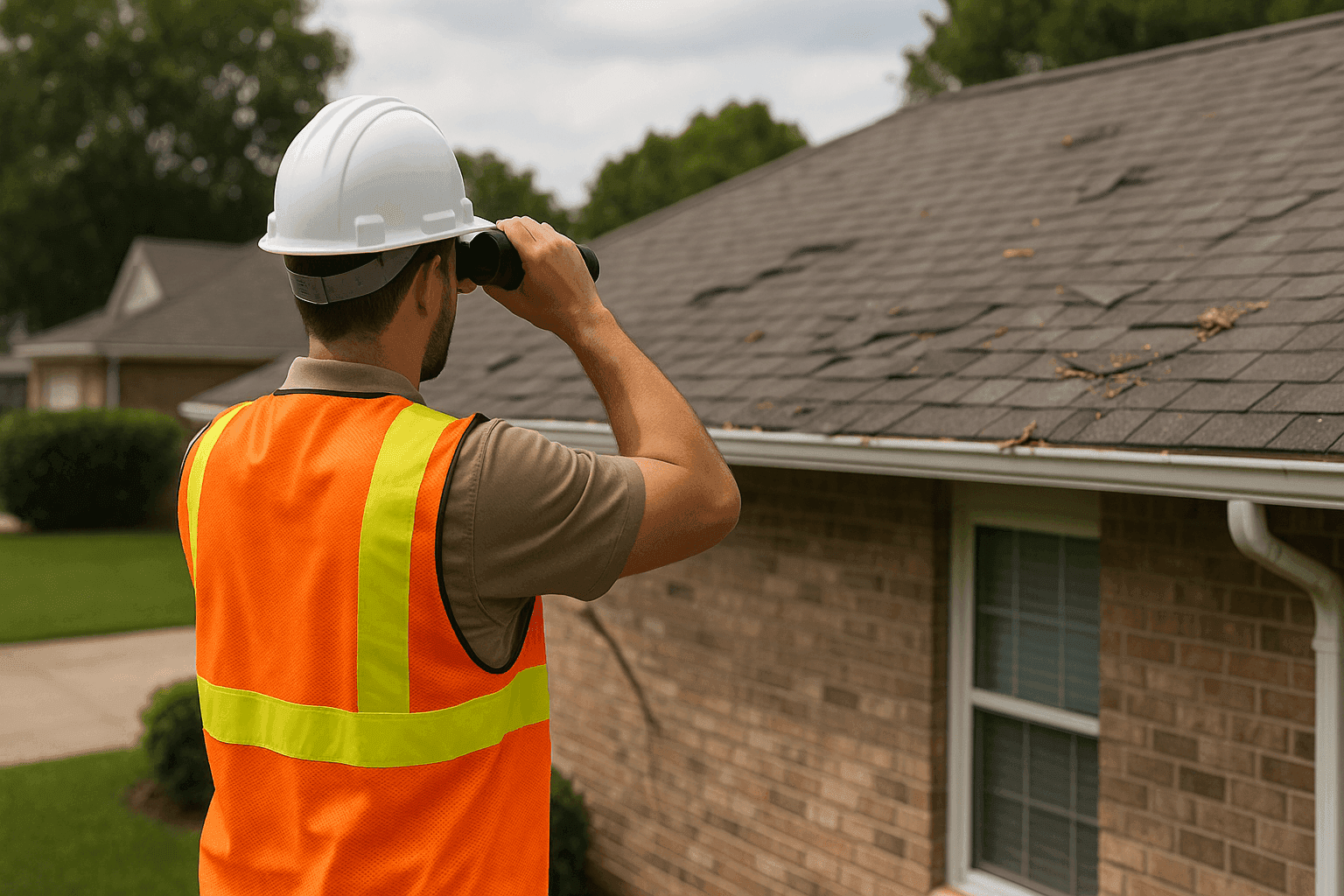
- Curling or Cracked Shingles: Shingles that look warped, bent, or split.
- Granules in Gutters: If you see piles of black or sandy material in your gutters or around downspouts, your shingles are shedding their armor.
- Dented Metal: Metal roofing, flashing, or vent covers with dimples or dents—classic hail signatures.
- Damaged Gutters or Downspouts: Bent, hanging, or blocked gutters can cause water to back up and damage your roof’s edge.
- Broken or Missing Flashing: Flashing is the thin metal around chimneys, skylights, and roof edges. Gaps or rust here let water in.
- Sagging or Uneven Roof Line: Any dip or wave might mean water has gotten in and damaged the underlying structure.
Pro tip: Walk all the way around your house after a storm. Sometimes, the side that took the brunt of the wind or hail tells a different story.
Hidden Issues to Watch For
Some damage plays hide-and-seek. You can’t always spot it with a quick glance. Still, a few red flags signal trouble overhead.
Warning signs inside and out:
- Water Spots on Ceilings or Walls: These brown or yellow stains mean water has already found a path inside.
- Musty Odors: That damp, basement-like smell upstairs could mean a slow leak is feeding mold behind the scenes.
- Peeling Paint or Bubbling Wallpaper: Excess moisture from above can cause finishes to separate from your walls.
- Attic Check: If you can safely peek into your attic, look for wet insulation, dark streaks, or sunlight peeking through where it shouldn’t.
Wind-driven rain is sneaky. It can push water under shingles or flashing, leading to problems that only show up after the next downpour.
When to Get a Professional Assessment
Climbing onto your roof after a storm is never a good idea. The surface could be slick, unstable, or weakened by hidden damage. According to the Occupational Safety and Health Administration (OSHA), most home falls happen from ladders and roofs.
Call Vesley Roofing if:
- You see visible damage, but can’t tell how deep it goes.
- There’s water inside your home (leaks, stains, or drips).
- You suspect structural issues (sagging, cracking, or popping sounds).
- The storm brought hail, high winds, or flying debris.
- You need documentation for insurance claims.
Our crews arrive with safety equipment, inspection tools, and years of experience—so you don’t have to risk a thing.
Vesley’s Inspection Process:
- We start with a ground-level survey, looking for obvious trouble.
- Next, we use ladders and harnesses (following OSHA guidelines) to get a closer look.
- Photos and detailed notes are taken for your records—critical for insurance.
- We explain what we find in plain language, with honest recommendations.
Insurance and Documentation Basics 📝
Insurance adjusters love details—but they can’t help if you don’t have proof. Here’s how to make your claim smoother:
Tips for documenting damage:
- Take clear, well-lit photos of all visible issues—shingles, gutters, inside stains.
- Write down the date and time of the storm and when you noticed the damage.
- Keep any receipts for emergency roofing repairs or tarping.
- Contact your insurer early. Ask about next steps and what documentation they need.
If you’re unsure, Vesley Roofing can help you gather everything you need. We’ve worked with all major insurers and know what they look for.
Safety First: Inspect from the Ground
Your safety is always more important than a quick fix. Here’s how to check things out without putting yourself in harm’s way.
Ground-level inspection checklist:
- Walk your property and look for shingle debris, nails, or flashing in the yard.
- Use binoculars to scan the roof surface for odd patterns or missing pieces.
- Check gutters and downspouts for blockages or pieces of roofing.
- Inspect areas under large trees for branches or other impacts.
Never climb onto a wet or storm-damaged roof. Even pros use harnesses and safety lines.
DIY vs. When to Call a Pro
There’s a time for DIY—and a time to call Vesley Roofing.
DIY:
- Taking photos from the ground.
- Collecting loose shingles or debris.
- Noting leaks or stains inside.
Call a Pro:
- Anything that means climbing.
- Structural changes (sagging, cracking).
- Persistent leaks or water entry.
- Storms with hail, extreme wind, or flying debris.
A professional brings training, tools, and an eye for problems you might miss.
What Pros Do On Arrival
When Vesley Roofing shows up, we don’t just glance and go. Here’s what happens:
- Safety setup: We use fall protection and inspect the roof’s stability.
- Detailed inspection: Checking not just the obvious, but also eaves, flashing, skylights, and hidden seams.
- Moisture testing: Infrared or moisture meters find leaks you can’t see.
- Temporary protection: If needed, we install tarps or sealants to keep your home dry until repairs begin.
- Clear reporting: We provide photo evidence and a summary you can use for insurance or repairs.
Prevention & Maintenance
The best time to fix a roof is before it leaks. Preventative Maintenance near you can slow down wear and catch issues before the next storm.
Preventative steps:
- Schedule annual roof inspections, especially before and after storm season.
- Keep gutters and downspouts clear—clogged drains lead to water damage.
- Trim back overhanging branches that could fall or scrape shingles.
- Consider impact-resistant roofing materials for hail-prone areas.
- Make sure attic ventilation and insulation are up to code (see International Residential Code [IRC] guidelines).
Regular care means fewer surprises when storms roll in.
Costs & Time Factors
Every roof and storm is different. But here’s what typically affects how long and how much:
- Severity of damage: Minor shingle repairs are faster than structural fixes.
- Type of roofing material: Tile, metal, and shingles each handle storms differently.
- Insurance approval: Faster claims mean faster repairs.
- Weather delays: More storms can slow scheduling.
Most emergency roofing repairs can be assessed within a day. Full roof replacement or major structural repairs can take longer, depending on material and availability.
When It’s an Emergency
Some situations can’t wait.
Call for emergency roofing right away if:
- Water is pouring into your home.
- Part of the roof has collapsed or is missing.
- Electrical panels or appliances are getting wet.
- You see active sparks or fire risk.
Quick action keeps your home safe and limits further damage.
FAQ: Common Questions
How soon should I inspect my roof after a storm?
As soon as it’s safe. First daylight after the storm passes is best. Don’t wait for leaks to appear—early checks mean faster fixes.
Will insurance cover all storm damage?
Most policies cover “sudden and accidental” damage from storms, but not wear and tear. That’s why documentation is so important.
How can I tell if it’s a minor issue or a big problem?
If you see missing shingles, water inside, or sagging, call a pro. What looks small now can turn into a bigger headache later.
Can I prevent storm damage?
You can’t stop the weather, but regular inspections, good gutters, and prompt repairs make a big difference.
Local and Seasonal Considerations
Storms don’t play favorites. But your region might face unique risks—hurricane winds, spring hail, or heavy winter snow.
- Spring/Summer: Hail and wind are big threats. Check after every major storm.
- Fall: Clear leaves and debris before winter arrives.
- Winter: Ice dams can cause leaks even without a storm.
No matter the season, Vesley Roofing is ready. We offer year-round emergency roofing, Preventative Maintenance near you, and guidance tailored to your local climate. Our experience covers everything from tile and shingle roofs to skylights, gutters, and eco-friendly options.
Call Vesley Roofing now — or reach us anytime at 844-460-8487 .